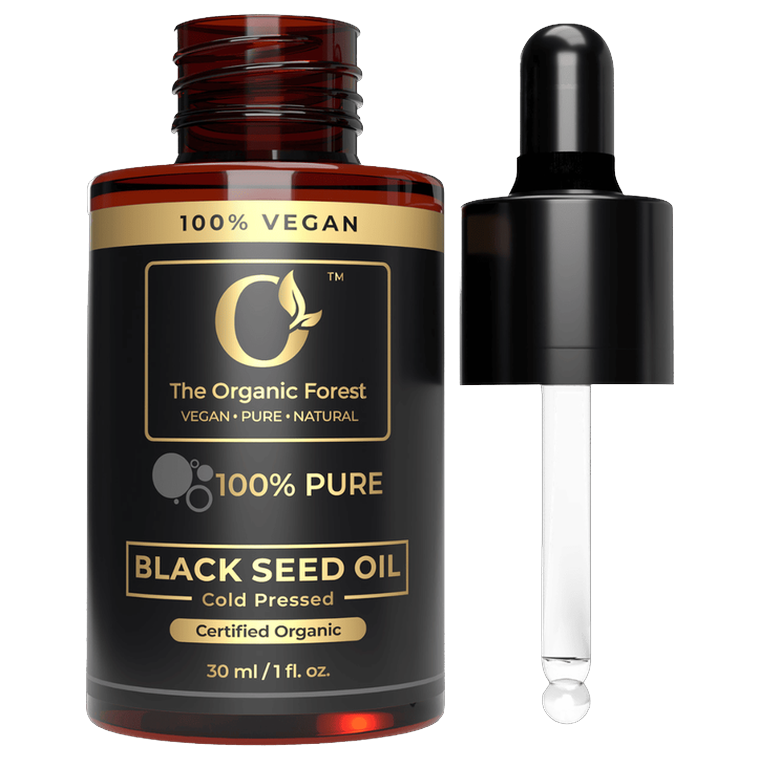
Moderate evidence Single-origin, GC/MS tested, CoA in every box.
Black Seed Oil carries an overall Moderate grade across the 11 studies linked on this page; the strongest signal is for acne.
A systematic review/meta-analysis of RCTs on Nigella sativa (black seed) for skin diseases, including acne, found a significantly positive odds ratio (4.59) for topical formulations, with an included RCT specifically showing efficacy of a black seed hydrogel for acne vulgaris; an additional in-vitro study supports antimicrobial activity against acne-causing bacteria.
“The Therapeutic Effects of Nigella sativa on Skin Disease: A Systematic Review and Meta-Analysis of Randomized Controlled Trials”
Read the study on PubMed →A comprehensive review identified 10 animal studies (excisional, burn, and diabetic wound models) using topical Nigella sativa oil or thymoquinone, with 7 showing positive effects on wound healing attributed to anti-inflammatory, antioxidant, and antibacterial properties; however, evidence is limited to preclinical animal models with no human RCTs identified.
“Nigella sativa and Its Active Compound, Thymoquinone, Accelerate Wound Healing in an In Vivo Animal Model: A Comprehensive Review”
Read the study on PubMed →A systematic review/meta-analysis of Nigella sativa (black seed) for skin diseases found positive pooled effects across various conditions including eczema, and cites an RCT comparing topical Nigella to betamethasone/Eucerin for hand eczema showing comparable benefit; however, eczema-specific data are limited and derived mostly from small or older trials referenced within the review rather than dedicated large eczema RCTs.
“The Therapeutic Effects of Nigella sativa on Skin Disease: A Systematic Review and Meta-Analysis of Randomized Controlled Trials”
Read the study on PubMed →A systematic review/meta-analysis of RCTs on Nigella sativa for various skin diseases (including psoriasis) found an overall positive odds ratio (4.59) for symptom improvement, but this pooled analysis included multiple skin conditions rather than psoriasis alone, and cites a single small RCT (Ahmed et al. 2014) specifically evaluating Nigella sativa in psoriasis patients. Evidence specific to psoriasis is limited to one referenced RCT not independently indexed in this search, so conclusions remain preliminary.
“The Therapeutic Effects of Nigella sativa on Skin Disease: A Systematic Review and Meta-Analysis of Randomized Controlled Trials”
Read the study on PubMed →Available evidence is limited to a single animal/ex-vivo study showing thymoquinone (Nigella sativa's active compound) improved aging-related endothelial dysfunction in rat arteries, with no human clinical trials on skin aging or wrinkles found.
“Thymoquinone improves aging-related endothelial dysfunction in the rat mesenteric artery”
Read the study on PubMed →One small clinical trial found that a cosmetic emulsion containing Nigella sativa (black seed) seedcake extract, combined with borage extract, improved skin hydration and barrier function over 6 weeks, but Nigella sativa's individual contribution was not isolated; the second study is unrelated to skin and focuses on oil extraction processing.
“In vivo and ex vivo evaluation of cosmetic properties of seedcakes”
Read the study on PubMed →Evidence is dominated by in-vitro studies demonstrating antifungal activity of Nigella sativa (black seed) oil/extracts against Candida and other fungal species, with one small animal (rat) model study showing comparable efficacy to fluconazole for vulvovaginal candidiasis; no human RCTs were identified.
“A therapeutic effect of Nigella sativa extract on female Wistar rats vulvovaginal candidiasis model”
Read the study on PubMed →Preclinical studies show thymoquinone (Black Seed's active compound) downregulates inflammatory markers (TLR2, TLR4, TNF-α, IL-1, NFκB) in rheumatoid arthritis models, and Nigella sativa is cited in traditional Persian medicine reviews for osteoarthritis, but no human RCTs specific to joint inflammation were found in this dataset.
“Thymoquinone attenuates rheumatoid arthritis by downregulating TLR2, TLR4, TNF-α, IL-1, and NFκB expression levels”
Read the study on PubMed →The single retrieved result is a broad narrative review of Nigella sativa's general pharmacological properties (anti-inflammatory, antioxidant, analgesic) with no specific clinical trials or studies examining its use for muscle pain directly.
“Nigella sativa: A Comprehensive Review of Its Therapeutic Potential, Pharmacological Properties, and Clinical Applications”
Read the study on PubMed →The only identified study is an animal (rat) model showing thymoquinone, the active compound in Black Seed, mitigates leptin-signaling and oxidative stress disruptions caused by chronic sleep restriction, but no human clinical trials on Black Seed for sleep/insomnia were found.
“Role of Thymoquinone on sleep restriction and its mitigating effect on leptin-mediated signaling pathway in rat brain”
Read the study on PubMed →The only relevant record is a narrative review discussing Nigella sativa oil for sinusitis, which mentions headache as one symptom potentially alleviated via anti-inflammatory and analgesic effects, but no clinical trials specifically targeting headache or migraine were found.
“Natural therapeutic approach of Nigella sativa (Black seed) fixed oil in management of Sinusitis”
Read the study on PubMed →Study counts reflect our internal research database. Figures are honest tallies, not marketing claims; every linked study opens on PubMed.