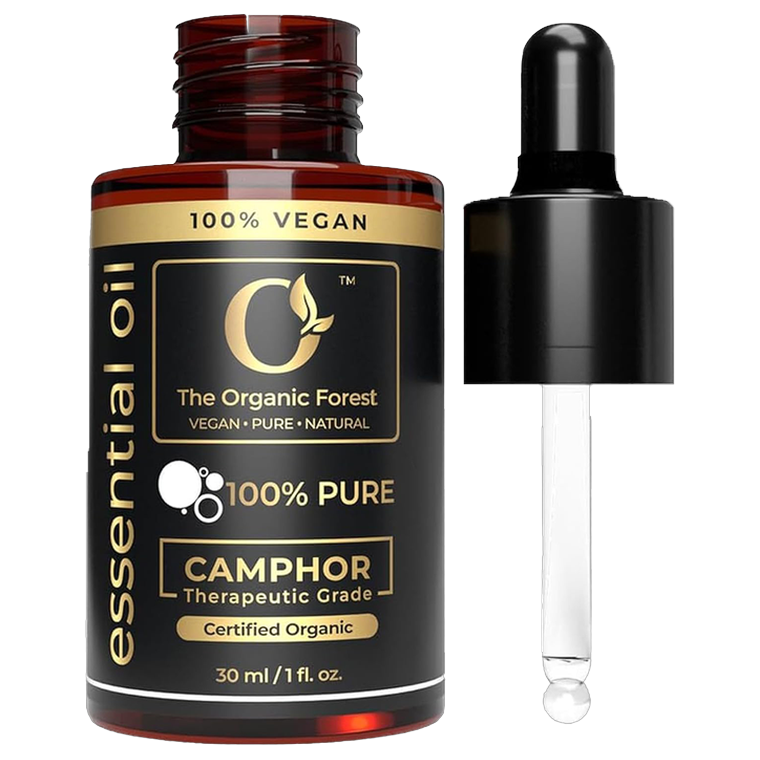
Early evidence Single-origin, GC/MS tested, CoA in every box.
Camphor Oil carries an overall Early grade across the 8 studies linked on this page; the strongest signal is for acne.
One in-vitro study found that essential oil from Cinnamomum camphora leaves (containing camphor as a component) showed antibacterial activity against C. acnes and S. aureus, but camphor itself was not isolated or tested individually; no clinical trials in humans with acne were found.
“Barks and leaves of Lauraceae plants as anti-acne”
Read the study on PubMed →The provided search results contain only a passing mention of camphor within a broader Cinnamomum verum phytochemical review and an unrelated insecticidal fumigation study; no clinical or preclinical studies specifically testing camphor essential oil for anxiety or stress were found.
“Phytochemical and pharmacological review of Cinnamomum verum J. Presl-a versatile spice used in food and nutrition”
Read the study on PubMed →Camphor appears as a component (not isolated test agent) in essential oil mixtures from Thymus satureioides, Myrtus communis, Artemisia herba alba, and Artemisia terrae-albae, with in-vitro studies showing these camphor-containing oils have variable antifungal/antimicrobial activity against Candida tropicalis, Aspergillus, and Fusarium species; camphor content correlated with antifungal activity in one study but effects were 'moderate to weak' or absent in several fungal strains tested.
“Simplex-centroid design as innovative approach in the optimization of antimicrobial effect of Thymus satureioides, Myrtus communis and Artemisia herba alba essential oils against Escherichia coli, Staphylococcus aureus and Candidatropicalis”
Read the study on PubMed →The only relevant result is an in vitro/in silico study of Cotula anthemoides essential oil (rich in camphor) showing anti-inflammatory activity in macrophage cells and traditional use for headache, but no clinical trials directly test camphor for headache or migraine.
“In Vitro Anti-Inflammatory Activity of Cotula anthemoides Essential Oil and In Silico Molecular Docking of Its Bioactives”
Read the study on PubMed →Only one animal study was found showing camphor-chemotype Cinnamomum camphora extract reduced paw swelling and inflammatory cytokines (IL-2, IL-6) in a rat adjuvant-induced arthritis model; a second study evaluated camphor only as an excipient in topical diclofenac gels rather than as an independent anti-inflammatory agent for joints.
“[Study on antiinflammatory effect of different chemotype of Cinnamomum camphora on rat arthritis model induced by Freund's adjuvant]”
Read the study on PubMed →Only one RCT was identified, testing a multi-ingredient ointment (sesame oil, camphor, zinc oxide) for prevention of radiation dermatitis, not camphor alone or classic contact dermatitis/rash; no studies isolate camphor's effect on rash or contact dermatitis specifically.
“Recove® burn ointment for managing acute radiodermatitis in patients with breast cancer: A double blind randomized controlled trial”
Read the study on PubMed →The only relevant result is a narrative review discussing camphor as part of a combination ointment (menthol, eucalyptus, camphor) that improved subjective sleep quality during common colds, but camphor's individual contribution was not isolated and no dedicated RCTs on camphor for sleep/insomnia were found.
“Aromatic ointments for the common cold: what does the science say?”
Read the study on PubMed →No PubMed studies were found investigating camphor for the treatment of dandruff; any claims linking camphor to dandruff relief are based on traditional use or anecdotal reports rather than clinical research.
A review of Cinnamomum camphora essential oil notes traditional use for muscle pain, inflammation, and irritation, but no clinical trials or controlled studies specifically testing camphor for muscle pain were found in the retrieved results.
“Phytochemistry and Applications of Cinnamomum camphora Essential Oils”
Read the study on PubMed →Study counts reflect our internal research database. Figures are honest tallies, not marketing claims; every linked study opens on PubMed.