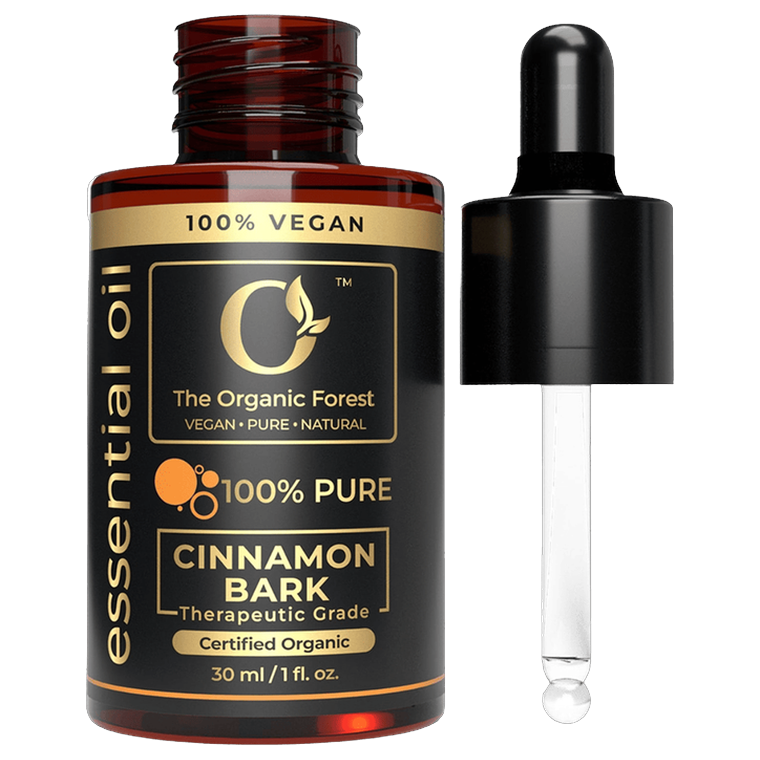
Moderate evidence Single-origin, GC/MS tested, CoA in every box.
Cinnamon Bark Oil carries an overall Moderate grade across the 9 studies linked on this page; the strongest signal is for headache/migraine.
One randomized double-blind placebo-controlled trial found that oral cinnamon supplementation (600mg capsules, not essential oil, taken orally) significantly reduced migraine frequency, severity, and duration, along with reducing inflammatory markers IL-6 and NO in migraine patients.
“Effect of cinnamon on migraine attacks and inflammatory markers: A randomized double-blind placebo-controlled trial”
Read the study on PubMed →All available evidence is limited to in-vitro antimicrobial studies showing cinnamon bark (Cinnamomum zeylanicum/verum) and its combinations (e.g., with vetiver) inhibit acne-associated bacteria like P. acnes and S. epidermidis, but no human clinical trials for acne treatment were found.
“The in vitro antimicrobial evaluation of commercially essential oils and their combinations against acne”
Read the study on PubMed →Evidence for Cinnamon Bark oil in burns/wound healing is limited to a general phytochemical review noting 'wound healing' among many pharmacological activities attributed to Cinnamomum verum compounds, with no dedicated clinical or in-vivo wound-healing studies identified; an ethnobotanical paper only tangentially mentions wound healing in a different plant (Sphagneticola trilobata), not cinnamon itself.
“Phytochemical and pharmacological review of Cinnamomum verum J. Presl-a versatile spice used in food and nutrition”
Read the study on PubMed →Only in-vitro/computational studies exist showing Cinnamomum zeylanicum extracts and phytochemicals have antimicrobial activity against dandruff-associated microbes (Malassezia furfur, P. acnes, S. epidermidis) and in silico inhibition of a bacterial cell division protein; no human clinical trials for dandruff treatment were found.
“Comparative antidandruff efficacy of plant extracts prepared from conventional and supercritical fluid extraction method and chemical profiling using GCMS”
Read the study on PubMed →Available evidence for Cinnamon Bark against fungal infection consists almost entirely of in-vitro antifungal susceptibility studies (e.g., against Candida albicans, Aspergillus spp., Penicillium spp.) showing inhibitory activity, with no human clinical trials identified.
“Chemical composition, antioxidant and antimicrobial activity of essential oils from tangerine (Citrus reticulata L.), grapefruit (Citrus paradisi L.), lemon (Citrus lemon L.) and cinnamon (Cinnamomum zeylanicum Blume)”
Read the study on PubMed →One in-vitro study tested Cinnamomum zeylanicum (cinnamon bark) essential oil among several plant oils for antimelanogenic and enzyme-inhibitory effects, but cinnamon bark itself showed only modest alpha-glucosidase inhibition and was not among the oils with notable antimelanogenic (anti-hyperpigmentation) activity, unlike citrus oils in the same study.
“Selected essential oils inhibit key physiological enzymes and possess intracellular and extracellular antimelanogenic properties in vitro”
Read the study on PubMed →Evidence is limited to in-vitro studies showing cinnamon bark extract components (cinnamaldehyde, 2-methoxycinnamaldehyde) inhibit RANKL-induced osteoclastogenesis relevant to bone/joint pathology, plus a general narrative review mentioning anti-inflammatory and arthritis-related properties without clinical trial data.
“Aldehydic components of cinnamon bark extract suppresses RANKL-induced osteoclastogenesis through NFATc1 downregulation”
Read the study on PubMed →One RCT found topical cinnamon ointment reduced perineal pain after episiotomy (not muscle pain specifically), and one preclinical study isolated analgesic diterpenoids from cinnamon bark showing effects in animal pain models; neither directly studied muscle pain in humans.
“Effects of cinnamon on perineal pain and healing of episiotomy: a randomized placebo-controlled trial”
Read the study on PubMed →The search returned mostly unrelated studies (e.g., animal semen cryopreservation); only a general phytochemical review mentions cinnamon bark's constituents (cinnamaldehyde, eugenol) as having reported 'anti-anxiety and antidepressant' properties without citing direct clinical trials on anxiety/stress in humans.
“Phytochemical and pharmacological review of Cinnamomum verum J. Presl-a versatile spice used in food and nutrition”
Read the study on PubMed →Study counts reflect our internal research database. Figures are honest tallies, not marketing claims; every linked study opens on PubMed.