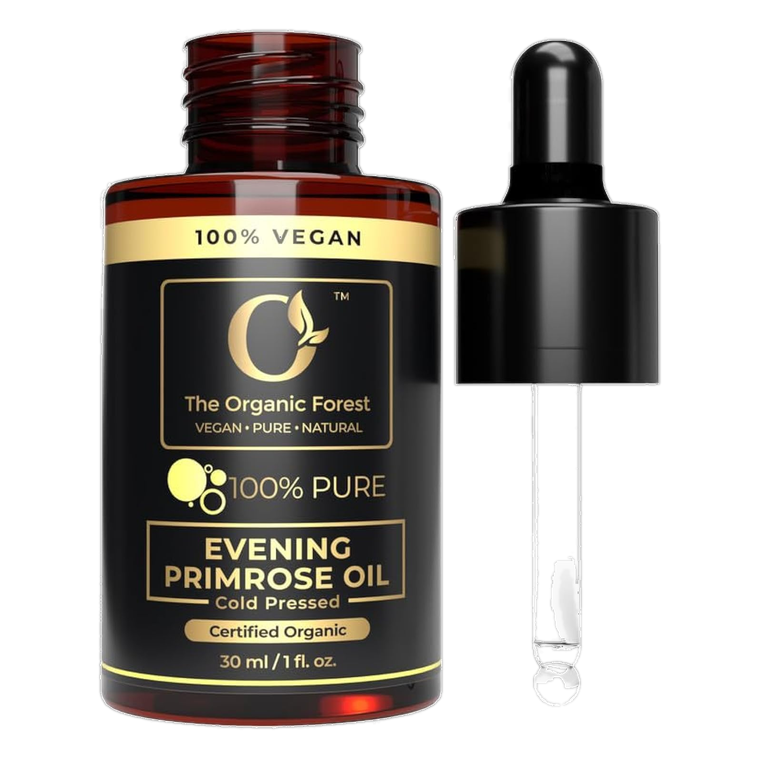
Moderate evidence Single-origin, GC/MS tested, CoA in every box.
Evening Primrose Oil carries an overall Moderate grade across the 12 studies linked on this page; the strongest signal is for joint inflammation.
A randomized double-blind trial found gammalinolenic acid (found in evening primrose oil, though this trial used borage oil) significantly reduced joint tenderness and swelling in rheumatoid arthritis patients; a separate RCT combining evening primrose oil with fish oil showed reduced disease activity scores and tender joint counts, though effects were largely attributed to the fish oil component.
“Treatment of rheumatoid arthritis with gammalinolenic acid”
Read the study on PubMed →A systematic review of RCTs explicitly found that evening primrose oil did not demonstrate effectiveness for acne vulgaris, despite showing some benefit in other inflammatory conditions.
“The effect of Oenothera biennis (Evening primrose) oil on inflammatory diseases: a systematic review of clinical trials”
Read the study on PubMed →A single narrative review discusses Evening Primrose oil's potential benefits for dry skin and stratum corneum barrier function, citing historical use and some pre-clinical/clinical data, but notes discrepancies and questionable study designs in the underlying literature.
“An updated review on efficacy and benefits of sweet almond, evening primrose and jojoba oils in skin care applications”
Read the study on PubMed →The key RCT (Hederos & Berg, 1996) found significant improvement in eczema symptoms over 16 weeks, but no significant difference between evening primrose oil and placebo, indicating the improvement was not attributable to treatment; a pharmacoeconomic review echoes that evidence for evening primrose oil in atopic eczema remains equivocal.
“Epogam evening primrose oil treatment in atopic dermatitis and asthma”
Read the study on PubMed →Only one in-vitro study found showing Oenothera biennis (evening primrose) hydroalcoholic extract had bactericidal activity against Candida spp., but this used a hydroalcoholic extract rather than the essential oil and no clinical trials in humans were identified.
“Phytochemical and Biological Screening of Oenothera Biennis L. Hydroalcoholic Extract”
Read the study on PubMed →The only identified study is a 1985 animal model (diabetic mice) examining essential fatty acid composition, where evening primrose oil supplementation partially reduced alopecia as a secondary observation, not a primary human hair loss outcome.
“Abnormal essential fatty acid composition of tissue lipids in genetically diabetic mice is partially corrected by dietary linoleic and gamma-linolenic acids”
Read the study on PubMed →One study found saponified evening primrose oil reduced melanogenesis in B16 melanoma cells and decreased UVB-induced hyperpigmentation in a small human application, while a 2025 narrative review lists evening primrose oil among vegetable oils with in vitro skin-whitening activity; no controlled clinical trials confirm efficacy.
“Saponified evening primrose oil reduces melanogenesis in B16 melanoma cells and reduces UV-induced skin pigmentation in humans”
Read the study on PubMed →A 2024 systematic review of RCTs explicitly found that evening primrose oil did not demonstrate effectiveness for psoriasis, grouping it with other conditions (e.g., psoriatic arthritis, chronic hand dermatitis) where EPO showed no significant benefit.
“The effect of Oenothera biennis (Evening primrose) oil on inflammatory diseases: a systematic review of clinical trials”
Read the study on PubMed →The key RCT (Hederos & Berg, 1996) found evening primrose oil (Epogam) showed no significant benefit over placebo for atopic dermatitis/eczema symptoms in children, despite increased plasma essential fatty acid levels; a narrative review mentions evening primrose oil among herbal options for atopic dermatitis but does not provide independent clinical evidence of efficacy for rash/contact dermatitis specifically.
“Epogam evening primrose oil treatment in atopic dermatitis and asthma”
Read the study on PubMed →Evening primrose oil for sleep is only studied as one ingredient in a multi-herb menopausal supplement combined with soy isoflavone, black cohosh, and chasteberry, which showed improved sleep problems versus placebo, but no isolated evidence exists for evening primrose oil alone on sleep/insomnia.
“Efficacy and Safety of Nutraceutical on Menopausal Symptoms in Post-Menopausal Women: A Randomized, Double-Blind, Placebo-Controlled Clinical Trial”
Read the study on PubMed →The single retrieved result is a general review on herb-drug interactions in IBD patients that only mentions evening primrose oil in passing; no clinical trials or studies specifically evaluating evening primrose oil for skin aging or wrinkles were found in this search.
“Drug-Herb Interactions in the Elderly Patient with IBD: a Growing Concern”
Read the study on PubMed →A non-systematic review of herbal treatments for skin disorders lists evening primrose only in the context of atopic dermatitis, not rosacea; rosacea in this same review is instead associated with green tea, licorice, and tormentil, with no direct evidence identified for evening primrose in rosacea.
“New Herbal Biomedicines for the Topical Treatment of Dermatological Disorders”
Read the study on PubMed →Study counts reflect our internal research database. Figures are honest tallies, not marketing claims; every linked study opens on PubMed.