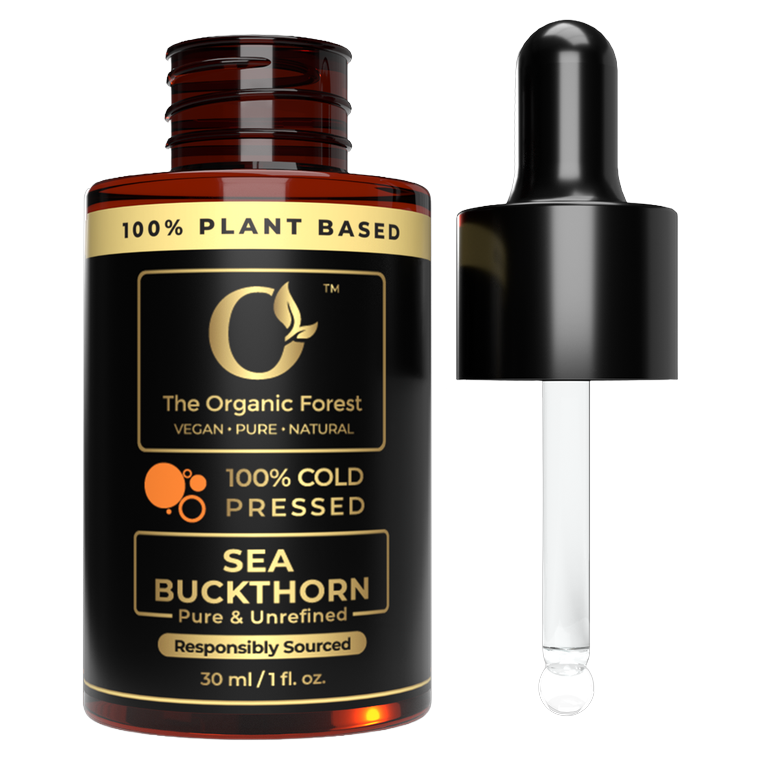
Early evidence Single-origin sea buckthorn oil — rich in carotenoids and omega fatty acids, loved for nourishing, replenishing skin. GC/MS tested, CoA in every box.
Sea Buckthorn Oil carries an overall Early grade across the 11 studies linked on this page; the strongest signal is for burns/wound healing.
Sea buckthorn leaf extract showed promising wound healing effects in animal burn studies, demonstrating faster healing, increased collagen synthesis, and enhanced angiogenesis compared to controls. However, evidence is limited to preclinical animal studies with no human clinical trials available.
“Mechanism of Wound-Healing Activity of Hippophae rhamnoides L. Leaf Extract in Experimental Burns”
Read the study on PubMed →One in-vitro study found that sea buckthorn seed oil improved skin hydration markers by increasing aquaporin-3 and hyaluronan synthase-2 expression in human keratinocyte cells and reconstructed skin models. No clinical trials in humans were found to confirm these effects for treating dry skin.
“Unsaturated fatty acid-enriched extract from Hippophae rhamnoides seed reduces skin dryness through up-regulating aquaporins 3 and hyaluronan synthetases 2 expressions”
Read the study on PubMed →A Cochrane systematic review found one study comparing sea buckthorn seed oil versus pulp oil versus placebo for atopic eczema, but concluded there is no convincing evidence of benefit from dietary supplements in eczema. The review explicitly states that supplements cannot be recommended for clinical practice at present.
“Dietary supplements for established atopic eczema”
Read the study on PubMed →Only one materials science study found Sea Buckthorn extract in composite coatings showed some activity against Candida albicans, but this was tested on packaging films rather than direct therapeutic use.
“The Influence of Functional Composite Coatings on the Properties of Polyester Films before and after Accelerated UV Aging”
Read the study on PubMed →One small controlled trial (50 patients) found that topical formulations containing sea buckthorn (Hippophae rhamnoides) extract along with other plant extracts significantly reduced melanin levels in Asian patients with melasma over 12 weeks compared to placebo. The study tested a combination formula rather than sea buckthorn alone, making it difficult to attribute effects specifically to sea buckthorn.
“Whitening efficacy of plant extracts including Hippophae rhamnoides and Cassia fistula extracts on the skin of Asian patients with melasma”
Read the study on PubMed →One in-vitro study found that a sea buckthorn oil-based nanoemulsion containing fermented plant extract showed anti-inflammatory effects in cell cultures, reducing inflammatory markers and cytokine production. However, this was only tested in laboratory cell models, not in humans or animals with actual joint inflammation.
“Panos-Fermented Extract-Mediated Nanoemulsion: Preparation, Characterization, and In Vitro Anti-Inflammatory Effects on RAW 264.7 Cells”
Read the study on PubMed →Only one review article mentions sea buckthorn oil as being studied for topical psoriasis treatment in animal models, but provides no specific efficacy data or study details.
“Experimental research in topical psoriasis therapy (Review)”
Read the study on PubMed →Limited in-vitro evidence shows sea buckthorn compounds have anti-inflammatory effects on skin cells, but no clinical trials specifically tested sea buckthorn oil for treating rash or contact dermatitis in humans.
“Casuarinin suppresses TNF-α-induced ICAM-1 expression via blockade of NF-κB activation in HaCaT cells”
Read the study on PubMed →Only one review article mentions acne as a potential area for future research with sea buckthorn, but provides no actual clinical evidence or studies testing its effectiveness for acne treatment.
“Remedial Prospective of Hippophae rhamnoides Linn. (Sea Buckthorn)”
Read the study on PubMed →Sea buckthorn shows traditional use for skin rejuvenation and wrinkle removal in cosmeceuticals, with one review mentioning its inclusion in anti-aging products, but no clinical trials specifically testing its anti-aging effects were found.
“Ethnomedicinal uses, phytochemistry and dermatological effects of Hippophae rhamnoides L.: A review”
Read the study on PubMed →Sea buckthorn oil was recommended by German integrative oncology experts for chemotherapy-induced mucositis (mouth rinses), but this was based on clinical experience rather than rigorous research evidence. No direct evidence was found for sea buckthorn oil treating sleep disorders or insomnia.
“Expert-guided approaches to complementary interventions for common side effects of cancer therapies: a practice-based perspective from integrative oncology centers in Baden-Württemberg, Germany”
Read the study on PubMed →Study counts reflect our internal research database. Figures are honest tallies, not marketing claims; every linked study opens on PubMed.