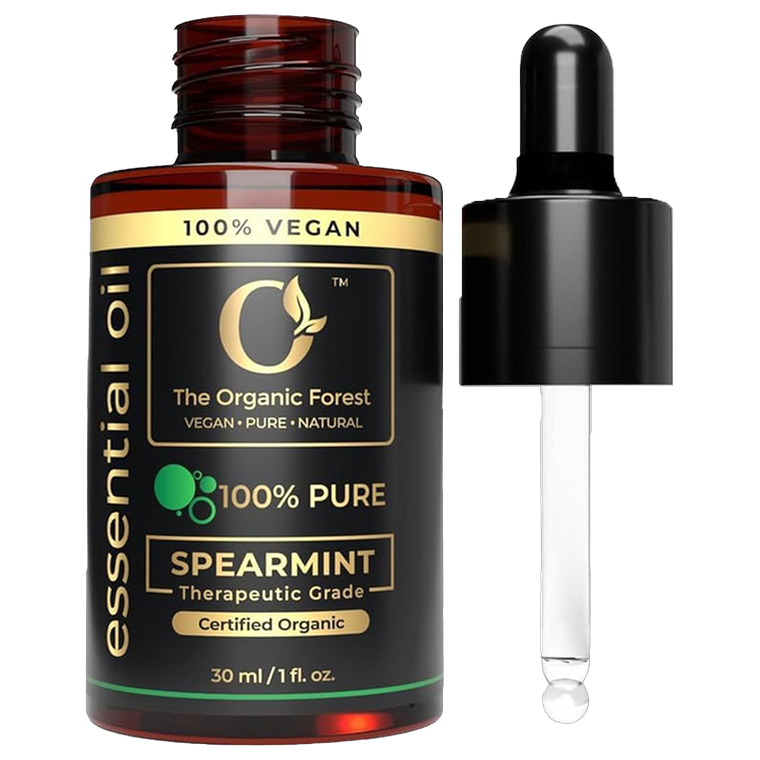
Early evidence Single-origin, GC/MS tested, CoA in every box.
Spearmint Oil carries an overall Early grade across the 9 studies linked on this page; the strongest signal is for acne.
One small RCT (n=60) found that spearmint essential oil combined with Berberis integerrima root extract was as effective as topical clindamycin for treating mild-to-moderate acne over 4 weeks. However, spearmint was only tested in combination, not as a standalone treatment, making it impossible to determine spearmint's individual contribution to the anti-acne effects.
“Evaluation of the effectiveness of Berberis integerrima Bunge root extract combined with spearmint essential oil in the treatment of acne vulgaris: A randomized controlled clinical trial”
Read the study on PubMed →Limited evidence shows spearmint extracts have antioxidant properties that may reduce oxidative stress in laboratory studies, but no clinical trials have tested spearmint specifically for anxiety or stress in humans.
“Antigenotoxic and antioxidant potential of aqueous fraction of ethanol extract of Mentha spicata (L.) against 4-nitroquinoline-1-oxide-induced chromosome damage in mice”
Read the study on PubMed →Limited evidence shows spearmint oil as a component in dental wound dressings (Alvogyl) for oral wound healing, but no studies specifically evaluate spearmint oil alone for burns or general wound healing.
“Alvogyl and absorbable gelatin sponge as palatal wound dressings following epithelialized free gingival graft harvest: a randomized clinical trial”
Read the study on PubMed →One in-vitro study showed spearmint essential oil effectively inactivated spoilage yeasts including Candida albicans, C. tropicalis, Pichia anomala and Saccharomyces cerevisiae in laboratory broth and fruit juices. However, this was only tested in food preservation contexts, not clinical fungal infections in humans.
“Inactivation of Spoilage Yeasts by Mentha spicata L. and M. × villosa Huds. Essential Oils in Cashew, Guava, Mango, and Pineapple Juices”
Read the study on PubMed →One small RCT found that spearmint tea reduced testosterone levels in women with PCOS-related hirsutism, but this study focused on excess hair growth (hirsutism) rather than hair loss/thinning, which are opposite conditions with different underlying mechanisms.
“Spearmint herbal tea has significant anti-androgen effects in polycystic ovarian syndrome. A randomized controlled trial”
Read the study on PubMed →One innovative study showed spearmint aromatherapy could trigger engineered cells to produce pain-relieving compounds in mice, but this involved synthetic biology rather than direct spearmint oil effects on muscle pain.
“Treatment of chronic pain by designer cells controlled by spearmint aromatherapy”
Read the study on PubMed →Animal studies show that carvone, the main component of spearmint oil, has sedative effects and can prolong pentobarbital sleeping time in mice, suggesting potential sleep-promoting properties. However, no human clinical trials have been conducted to evaluate spearmint oil specifically for sleep disorders or insomnia.
“Influence of the chirality of (R)-(-)- and (S)-(+)-carvone in the central nervous system: a comparative study”
Read the study on PubMed →One review article mentions traditional use of Mentha pulegium for migraine treatment in Moroccan folk medicine, but no clinical trials or controlled studies were found testing spearmint essential oil specifically for headache/migraine treatment.
“Mentha Pulegium: A Plant with Several Medicinal Properties”
Read the study on PubMed →One study mentions traditional use of mint oils for psoriasis treatment but provides no clinical evidence, focusing instead on anti-rickettsial activity. No clinical trials or controlled studies were found testing spearmint oil specifically for psoriasis treatment.
“Evaluation of the possible use of genus Mentha derived essential oils in the prevention of SENLAT syndrome caused by Rickettsia slovaca”
Read the study on PubMed →Study counts reflect our internal research database. Figures are honest tallies, not marketing claims; every linked study opens on PubMed.