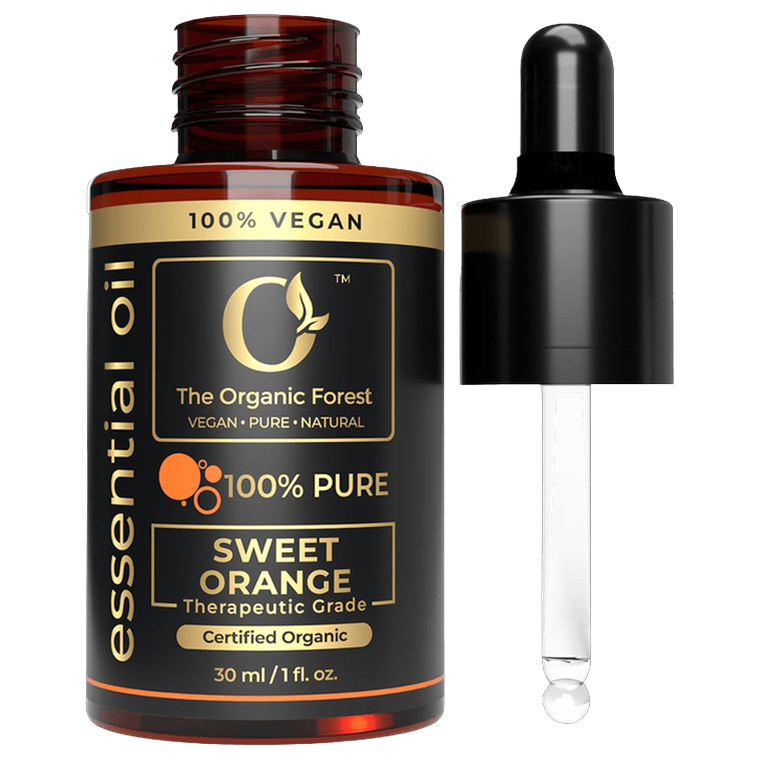
Moderate evidence Single-origin, GC/MS tested, CoA in every box.
Sweet Orange Oil carries an overall Moderate grade across the 9 studies linked on this page; the strongest signal is for anxiety/stress.
Animal studies (e.g., Wistar rat elevated plus-maze/light-dark paradigm) demonstrate acute anxiolytic-like effects of sweet orange essential oil aroma, and several human trials in clinical/dental/waiting-room settings report reduced self-reported anxiety and physiological stress markers (e.g., cortisol, blood pressure) with orange oil inhalation, though many are small, unblinded, or use heterogeneous outcome measures.
“Anxiolytic-like effect of sweet orange aroma in Wistar rats”
Read the study on PubMed →One animal study (golden hamsters) found that sweet orange essential oil reduced sebaceous gland activity, inflammatory cytokines, and androgen ratios linked to acne, suggesting a potential mechanism for acne improvement, but no human clinical trials exist.
“Essential Oil and Juice from Bergamot and Sweet Orange Improve Acne Vulgaris Caused by Excessive Androgen Secretion”
Read the study on PubMed →The only directly relevant study found is an RCT on an oral standardized red orange (Citrus sinensis) extract supplement showing antioxidant and anti-inflammatory effects and improved wellbeing in elderly subjects, not on Sweet Orange essential oil applied topically for skin aging/wrinkles specifically.
“Antioxidant Efficacy of a Standardized Red Orange (Citrus sinensis (L.) Osbeck) Extract in Elderly Subjects: A Randomized, Double Blind, Controlled Study”
Read the study on PubMed →The only clearly relevant study found investigated extracellular vesicles derived from orange juice (not sweet orange essential oil) and showed wound-healing promoting effects in vitro and in diabetic/healthy mouse models; this does not constitute evidence for sweet orange essential oil itself in human burns or wound healing.
“Orange-Derived Extracellular Vesicles: Characterization and Therapeutic Applications in Normal and Diabetic Wound Healing in In Vivo Models”
Read the study on PubMed →The single directly relevant study evaluates a chitosan/sandalwood oil (not sweet orange oil) Pickering emulsion coating tested against fungal pathogens on fruit, with Citrus sinensis (sweet orange) appearing only as a fruit substrate/MeSH term rather than as the antifungal agent studied; no direct in-vitro or clinical evidence for sweet orange essential oil's antifungal activity was found in this result set.
“Antifungal features and properties of chitosan/sandalwood oil Pickering emulsion coating stabilized by appropriate cellulose nanofiber dosage for fresh fruit application”
Read the study on PubMed →Only one in-vitro study was found examining citrus peel essential oils (including Citrus sinensis/sweet orange as part of hybrid cultivars) on melanogenesis in mouse melanoma cells, showing anti-melanogenic activity of constituents like limonene, but no human or clinical data specific to Sweet Orange oil for hyperpigmentation exist.
“Inhibition of Melanogenesis by Essential Oils from the Citrus Cultivars Peels”
Read the study on PubMed →A 2022 preclinical study (Li et al., Phytother Res) found that sweet orange (Citrus sinensis) peel essential oil—rich in d-limonene—inhibited TNF-α and COX-2 expression and reduced joint inflammation in a rat rheumatoid arthritis model with activity comparable to ibuprofen. No human clinical trials, RCTs, or systematic reviews were identified for sweet orange oil and joint inflammation.
“Chemical constituents, biological activities and anti-rheumatoid arthritic properties of four citrus essential oils”
Read the study on PubMed →One in-vitro study tested a Citrus sinensis (sweet orange) ethanol extract alongside four other Rutaceae extracts on H2O2/LPS-induced HaCaT keratinocyte inflammation, showing some anti-oxidant and anti-inflammatory (NF-κB, JAK-STAT3) effects, but the psoriasis-relevant CCL20 suppression was specifically attributed to Zanthoxylum bungeanum, not sweet orange.
“Five Rutaceae family ethanol extracts alleviate H(2)O(2) and LPS-induced inflammation via NF-κB and JAK-STAT3 pathway in HaCaT cells”
Read the study on PubMed →Sweet Orange essential oil appears only as one component in a multi-ingredient formula (Compound Anshen oil) tested in a mouse model for sedative/hypnotic effects, and in another study orange juice was merely a flavoring vehicle for midazolam rather than a treatment itself; no studies directly isolate or test Sweet Orange oil alone for insomnia in humans.
“Sedative and hypnotic effects of compound Anshen essential oil inhalation for insomnia”
Read the study on PubMed →Study counts reflect our internal research database. Figures are honest tallies, not marketing claims; every linked study opens on PubMed.