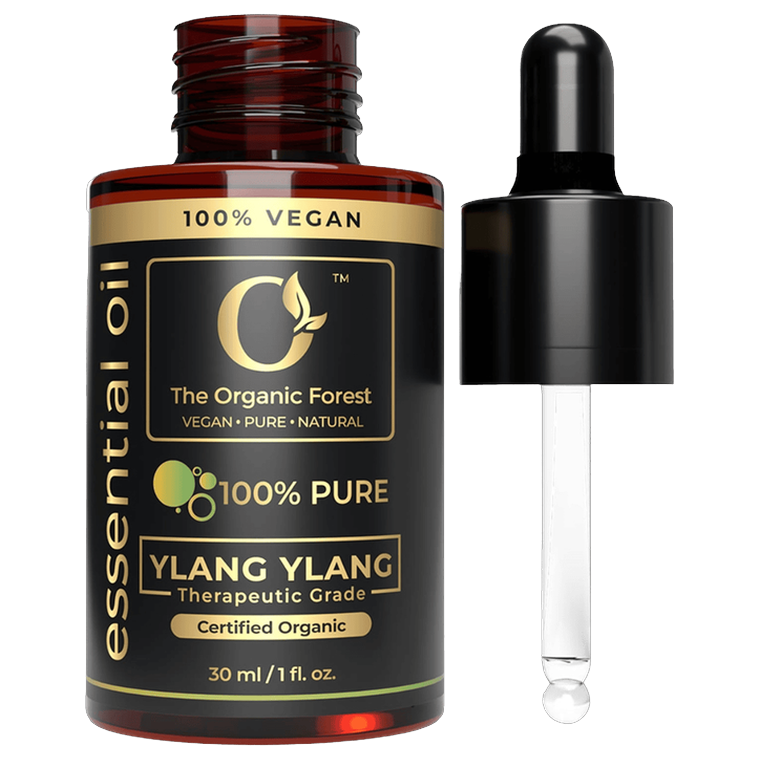
Moderate evidence Single-origin, GC/MS tested, CoA in every box.
Ylang Ylang Oil carries an overall Moderate grade across the 12 studies linked on this page; the strongest signal is for anxiety/stress.
Small human trials show ylang ylang oil (alone or in blends) can produce subjective relaxation and reduce blood pressure/stress markers, but most studies combine it with other oils (e.g., lavender, neroli) making isolated effects unclear, and animal conflict-test data found no anxiolytic effect distinct from GABA-mediated anxiolytics.
“Relaxing effect of ylang ylang oil on humans after transdermal absorption”
Read the study on PubMed →In-vitro studies show ylang ylang essential oil has antimicrobial activity against acne-related bacteria (S. epidermidis, P. acnes) and displays synergy with other oils, with a second study noting molecular docking findings suggesting potential relevance to acne, but no clinical/human trials have tested it for acne treatment.
“The in vitro antimicrobial evaluation of commercially essential oils and their combinations against acne”
Read the study on PubMed →Only one study directly tested a Ylang Ylang-containing blend (with dwarf ylang-ylang absolute alongside other plant extracts) on skin surface topography, showing modest improvements in skin roughness after 4 weeks, while other studies focus on oxytocin/relaxation or blood pressure rather than skin aging specifically.
“Potential of native Thai aromatic plant extracts in antiwrinkle body creams”
Read the study on PubMed →One in-vitro study found ylang ylang essential oil inhibited tissue-remodeling proteins in human dermal fibroblasts, suggesting a possible wound healing property, but no clinical or animal studies were found to confirm this in vivo.
“Chemical composition analysis and in vitro biological activities of ten essential oils in human skin cells”
Read the study on PubMed →A single formulation study developed a Ylang-Ylang essential oil nanoemulgel and tested it for scalp psoriasis/dandruff, showing good stability, skin retention, and in vitro antimicrobial/antioxidant activity, but this was not a clinical trial in dandruff patients demonstrating symptomatic improvement.
“Cananga odorata (Ylang-Ylang) Essential Oil Containing Nanoemulgel for the Topical Treatment of Scalp Psoriasis and Dandruff”
Read the study on PubMed →A single formulation study developed a Ylang Ylang nanoemulgel primarily targeting scalp psoriasis and dandruff, incidentally reporting improved skin hydration (18.09 to 41.28 AU) and no skin irritation in in vivo testing, but this was not a dedicated clinical trial for dry skin.
“Cananga odorata (Ylang-Ylang) Essential Oil Containing Nanoemulgel for the Topical Treatment of Scalp Psoriasis and Dandruff”
Read the study on PubMed →Only one in-vitro/computational study was found, showing ylang-ylang essential oil has antioxidant and antibacterial properties plus molecular docking data suggesting potential binding affinity to eczema-related proteins, but no clinical or animal studies test its actual effect on eczema.
“Chemical Composition, Antioxidant, Antibacterial, and Hemolytic Properties of Ylang-Ylang (Cananga odorata) Essential Oil: Potential Therapeutic Applications in Dermatology”
Read the study on PubMed →Available evidence is limited to in vitro studies showing Cananga odorata (ylang ylang) extracts/essential oil, often in combination with other plant extracts or oils, exhibit antifungal activity against Candida albicans, with no human clinical trials identified.
“In vitro antimicrobial activities and phytochemical profiling of Cananga odorata, Terminalia catappa, and Terminalia mantaly”
Read the study on PubMed →A single animal study found that ylang-ylang essential oil reduced leukocyte infiltration, joint edema, IL-6 levels, cartilage destruction, and mechanical hyperalgesia in zymosan-induced and CFA-induced arthritis models in mice, suggesting antiarthritic and anti-inflammatory potential.
“Antiarthritic and Antinociceptive Properties of Ylang-Ylang (Cananga odorata) Essential Oil in Experimental Models”
Read the study on PubMed →The single available study found that ylang-ylang essential oil reduced neuropathic pain and associated anxiety in a mouse model of nerve injury, but this evidence pertains to neuropathic pain, not general muscle pain, and has not been tested in humans.
“Ylang-ylang (Cananga odorata (Lam.) Hook. f. & Thomson) essential oil reduced neuropathic-pain and associated anxiety symptoms in mice”
Read the study on PubMed →Only one identified study evaluated a Ylang Ylang nanoemulgel formulation for scalp psoriasis and dandruff, showing favorable in vivo skin tolerability, hydration, and sebum-regulating effects but no clinical trial data on psoriasis outcomes or lesion severity.
“Cananga odorata (Ylang-Ylang) Essential Oil Containing Nanoemulgel for the Topical Treatment of Scalp Psoriasis and Dandruff”
Read the study on PubMed →A systematic review of pre-clinical animal studies mentions Cananga odorata (ylang ylang) flower extract among many plants with reported sedative/anxiolytic effects, but this is based on animal models, not human clinical trials, and no dedicated human sleep studies were found.
“Systematic review on the anxiolytic and hypnotic effects of flower extracts in in vivo pre-clinical studies published from 2010 to 2020”
Read the study on PubMed →Study counts reflect our internal research database. Figures are honest tallies, not marketing claims; every linked study opens on PubMed.